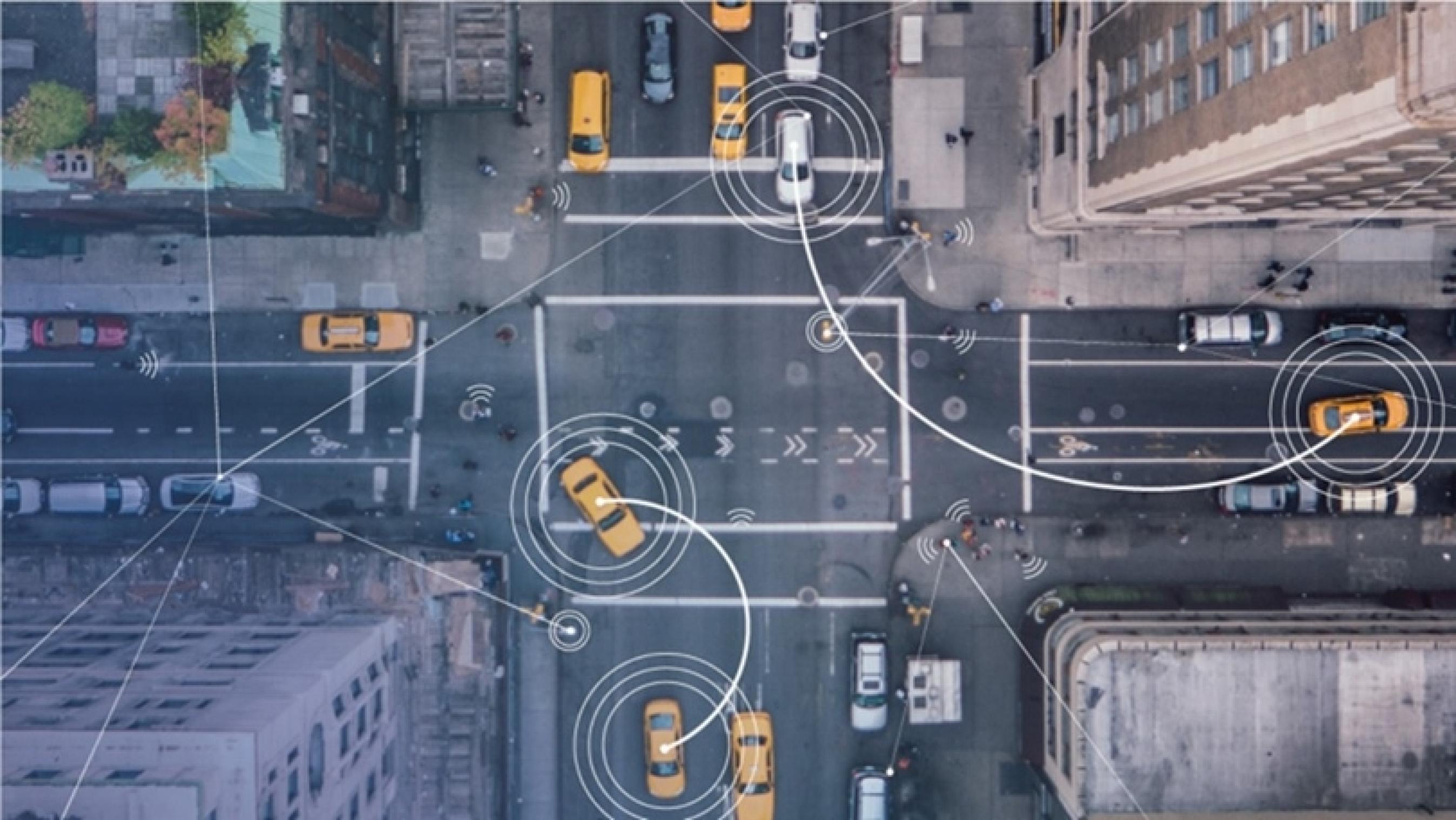
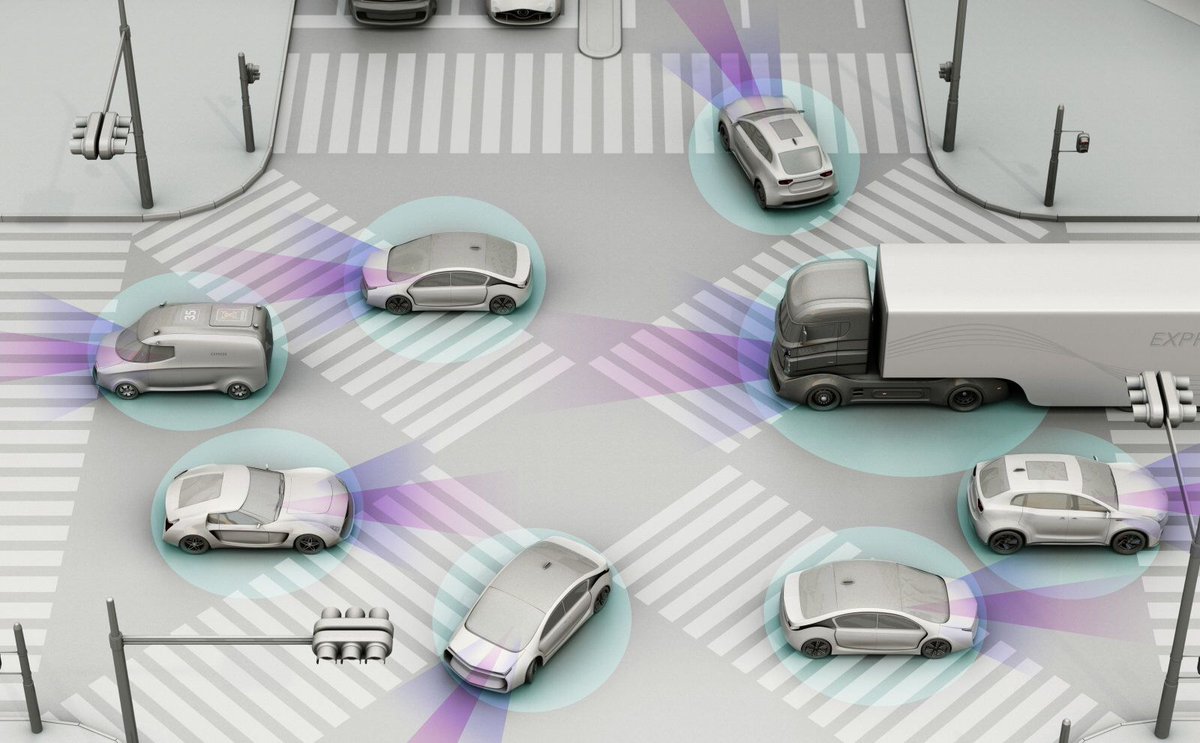
Our V2X lab integrates AI, V2X communications and digital twins across system and network research to advance connected, automated mobility and intelligent transportation.
SYSTEM LEVEL
Multimodal Physical AI
Vision-language models (VLMs), multimodal sensor fusion and
multi-agent learning connect embodied perception with reasoning and
action. Key directions include spatial scene understanding, object
tracking and motion prediction across vehicles, drones and roadside
infrastructure.
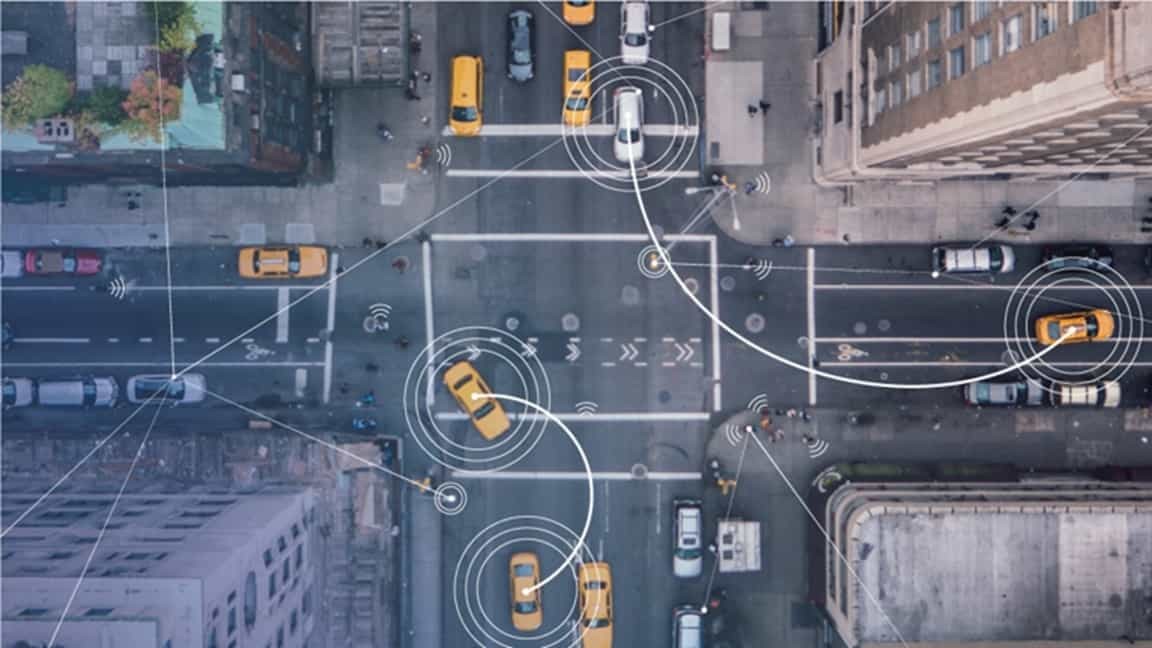
Automated Cooperative Driving
Cooperative perception, trajectory prediction and distributed
planning underpin automated driving in shared road environments.
Integrating ETSI cooperative awareness and collective perception
messages with multi-agent decision-making enables research on
manoeuvre coordination, intersection negotiation and cooperative
merging under communication delays and partial observability.
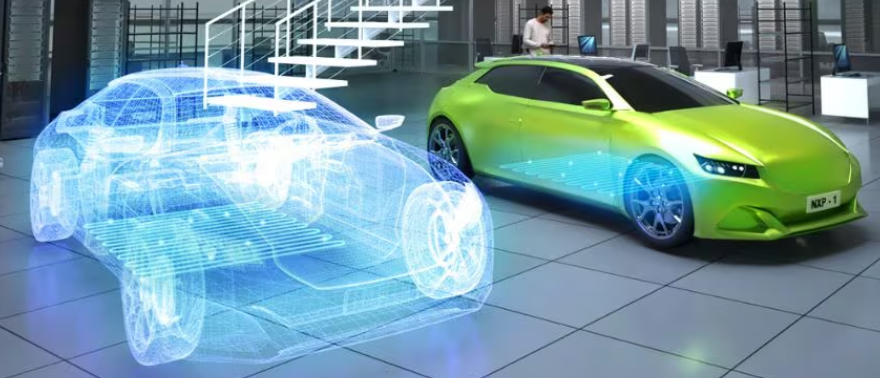
Network Mobility Digital Twin
Coupled mobility–network digital twins integrate traffic
microsimulation, sensor models, vehicle dynamics and wireless
communication. Closed-loop co-simulation supports scenario
generation and reproducible evaluation of cooperative perception,
manoeuvre planning and network performance under varying traffic,
channel and latency conditions.
NETWORK LEVEL
V2X Access Technologies
Cross-layer resource allocation, MAC scheduling and congestion
control address connectivity challenges in ITS-G5 and 5G NR-V2X,
complemented by RAN slicing in cellular networks. Emerging 6G
research encompasses integrated sensing and communication (ISAC) and
reconfigurable intelligent surfaces (RIS), with emphasis on
beamforming, RIS configuration and sensing–communication trade-offs
under high mobility.
Cloud–Edge Intelligence
V2X-assisted cooperation connects onboard intelligence with roadside
edge processing and cloud learning. Key research directions include
edge-assisted multi-vehicle sensor fusion, cooperative inference and
mobility-aware task offloading. Joint communication–computation
scheduling addresses information freshness and end-to-end latency
constraints for collective perception and manoeuvre coordination.
Semantic Cooperative Communications
Semantic communication selects and compresses task-relevant information
for cooperative perception and manoeuvre coordination. Research targets
lower bandwidth use and less redundant messaging while preserving
information freshness, task accuracy and compatibility with ETSI V2X services.
Research challenges
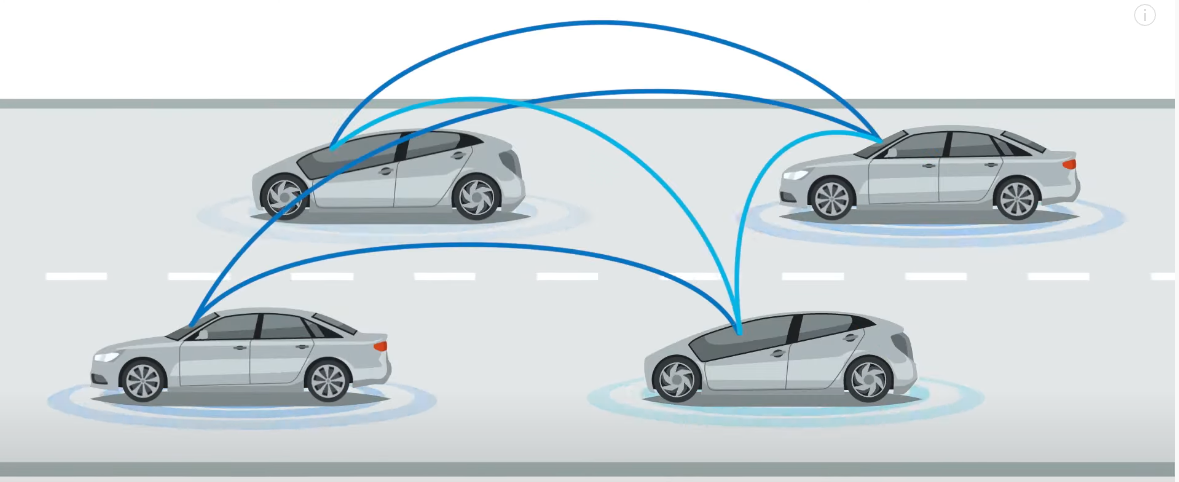
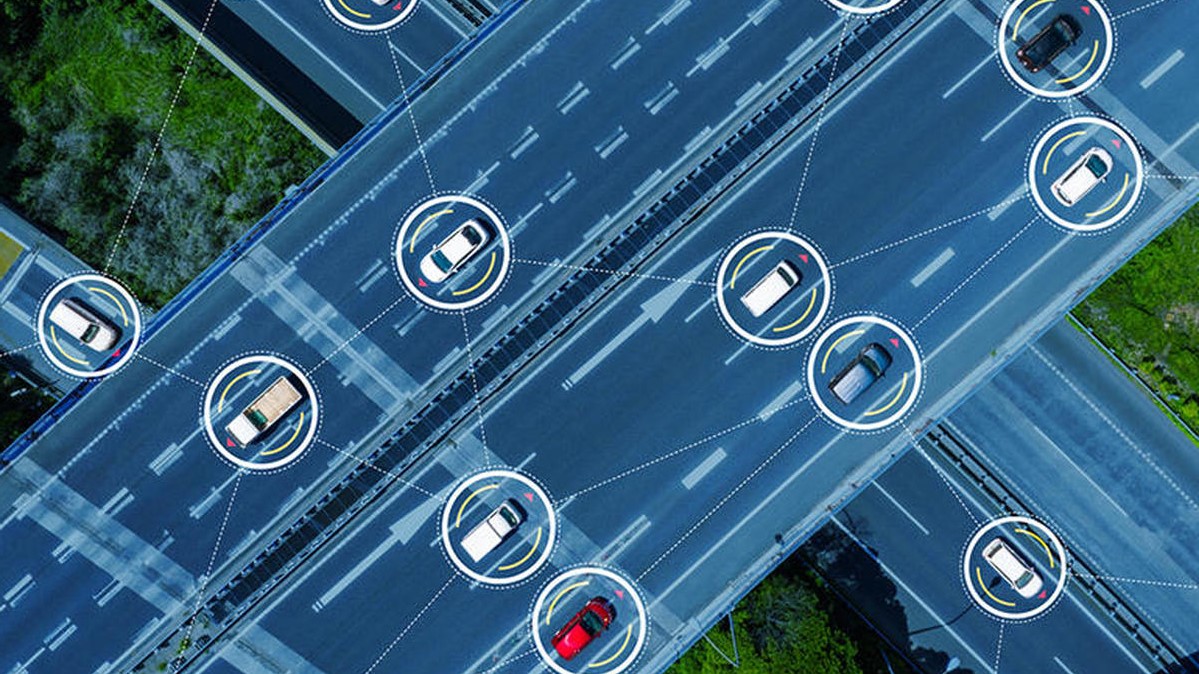
V2X in dense traffic
Keeping safety messages timely and reliable when many vehicles share the same wireless channel.
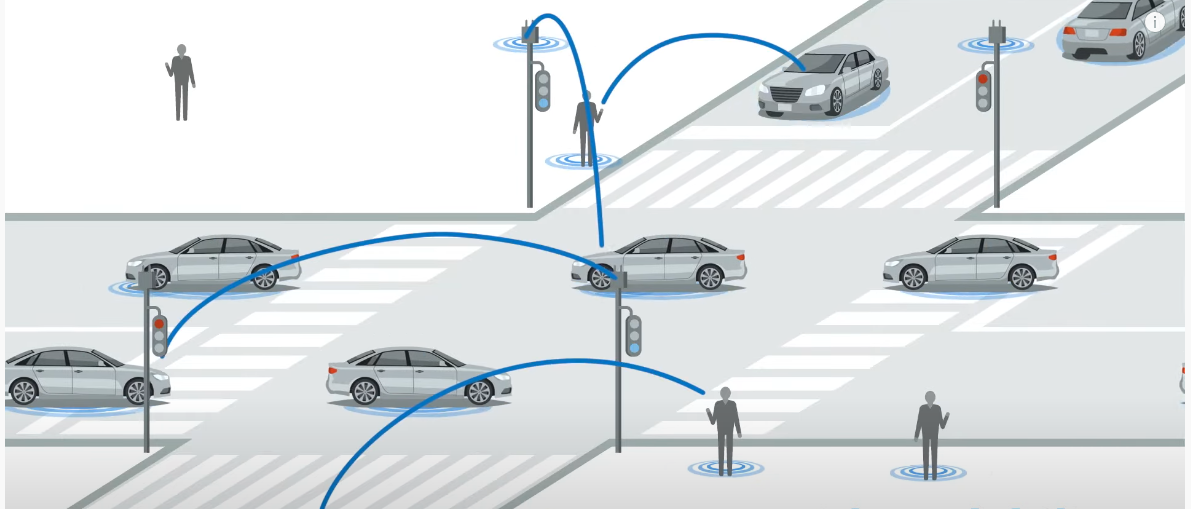
Coordinating at intersections
Sharing vehicle positions and intended paths to coordinate safe crossings, even when messages arrive late.
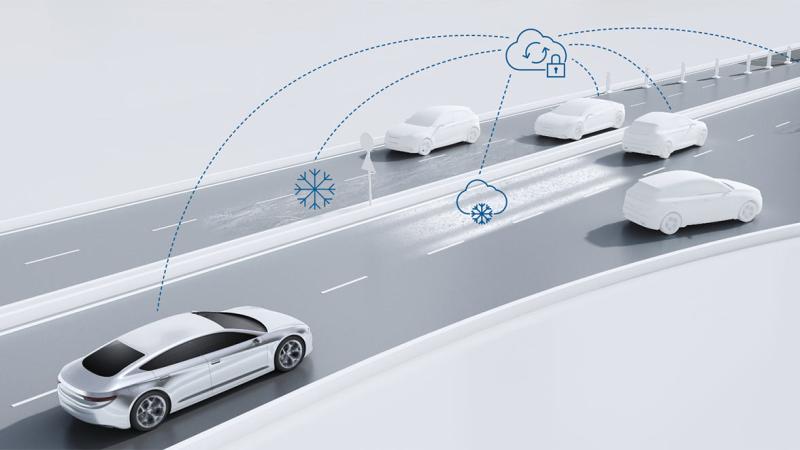
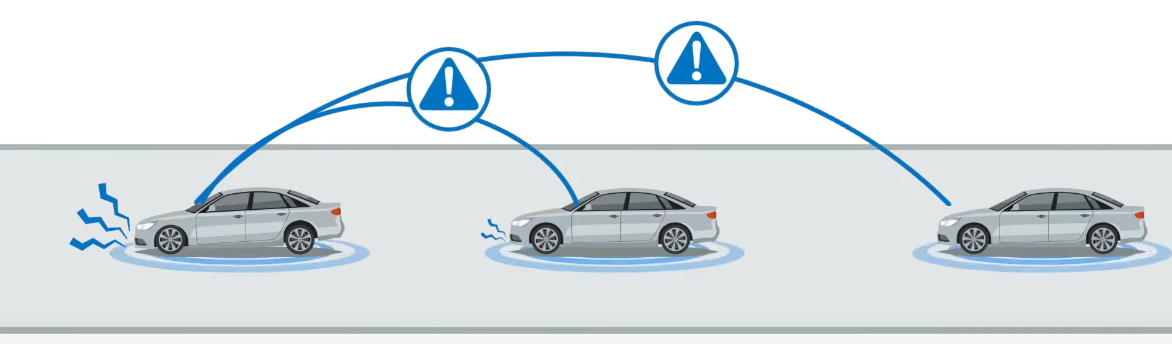
Sharing road warnings
Delivering hazard warnings to nearby vehicles quickly without flooding the network with repeated messages.
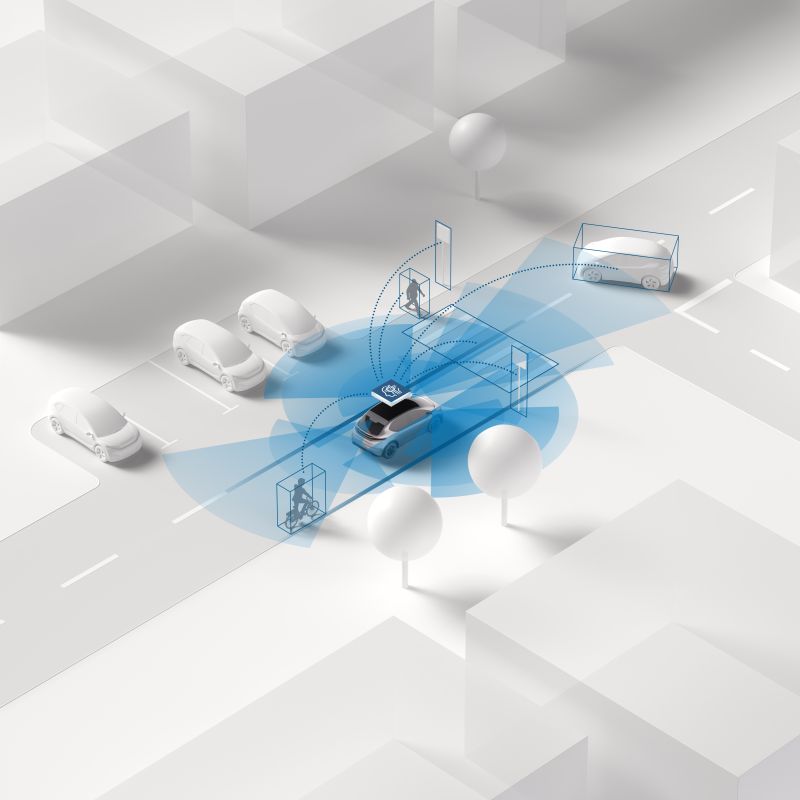
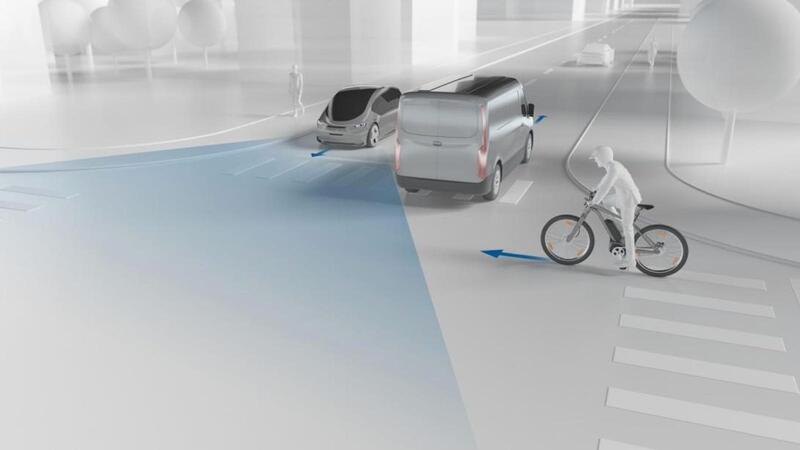
Protecting pedestrians and cyclists
Sharing vehicle and roadside observations to track pedestrians and cyclists when their position or movement is uncertain.
Reliable vehicle-to-vehicle links
Choosing when and where vehicles transmit to reduce interference and missed safety messages.
Digital twins for V2X
Recreating roads, vehicles and wireless links to test how delayed or lost messages affect cooperative driving.
Managing network demand
Allocating wireless capacity as traffic changes so safety messages remain timely alongside other connected-vehicle services.
Understanding road scenes
Combining onboard sensor data with information from nearby vehicles to understand complex road situations.
Vehicle–roadside–cloud cooperation
Sharing data processing across vehicles, roadside computers and the cloud to support timely driving decisions.
Sharing what matters
Sending only the information needed for cooperative driving, reducing message size without losing important details.
Seeing beyond obstructions
Using observations shared by nearby vehicles and roadside sensors to detect road users hidden from view.
Testing V2X in varied conditions
Testing V2X under different traffic, driving and wireless conditions to identify when cooperative driving could fail.
Staying connected on the move
Maintaining V2X services as vehicles move between network coverage areas and roadside computing systems.
Coordinating vehicle movements
Sharing observations and intended paths to support safe merging and collision avoidance despite communication delays.
Research towards standards
Connecting new ideas with interoperable systems
Our research studies contribute to the development of standards such as ETSI and 3GPP,
through protocol design, reproducible
evaluation and evidence.